Showing posts with label green. Show all posts

Sunday, February 10, 2013

Making Sense of the "Circular Economy"

From - http://www.triplepundit.com/2013/01/make-sense-circular-economy/


 resource recovery recycling Here Today Garbage Tomorrow Heather Rogers Ellen MacArthur Foundation Ellen MacArthur ecovative Digital Lumens Dell green Circular Economy Brockelsby Ltd. 3M green
If the name Ellen MacArthur rings a bell, you’re probably thinking of the person who set a record for circumnavigating the world in a high tech sailboat, solo no less, but that’s not the only circle for which she is known. Ms. MacArthur, through the charitable organization that bears her name, has formulated an economic concept called the circular economy, which is quickly becoming a buzzword around sustainability circles.
As far as buzzwords go, “circular economy” is a fairly pedestrian combination (as opposed to, say, Sex Pistols) and perhaps that’s just as well. Rather than getting distracted by the words, it’s far more interesting to pick through the concept itself and see how MacArthur’s vision of economic growth meets the challenges of a world of shrinking resources.

The Circular Economy

MacArthur was profiled and interviewed just last week on the Harvard Business Review blog by Eric Hellweg, and for those of you who don’t have time to read the whole thing (though you really should, it’s fascinating), the circular economy concept basically boils down to managing resource scarcity in the context of consumer demand for environmental responsibility.
As described by the Ellen MacArthur Foundation, it comes out like this:
“The circular economy is a generic term for an industrial economy that is, by design or intention, restorative and in which materials flows are of two types, biological nutrients, designed to reenter the biosphere safely, and technical nutrients, which are designed to circulate at high quality without entering the biosphere.”

Why the Circular Economy is more than mere recycling

While the emphasis on reentering and circulating call recycling to mind, MacArthur’s concept of a circular economy is on a different plane entirely. The Foundation’s website is careful to note the difference by referencing Heather Rogers, journalist and author of Here Today, Garbage Tomorrow:
“One of the biggest confusions around a circular economy framework is that sparked by the word ‘recycling’…’The vast majority of wastes are created during the manufacturing process, and that is where we should focus.’”
Recycling puts the onus on consumers to use goods more carefully and to dispose of the leftovers responsibly. The circular economy asks that manufacturers produce goods that involve less waste in the first place, and that enable consumers to integrate recycling into their daily habits more intensively.

Case studies for the Circular Economy

When you look at the Foundation’s case studies, the potentials for economic growth become clear. That’s especially true when you consider that “consumers” doesn’t just mean individual householders, it also means companies that consume products through their supply chains.
The waste oil sector in England, for example, was historically focused on animal feed until new legislation targeted biofuels. The Yorkshire waste oil processor Brockelsby Ltd. adapted not only by pivoting to the biofuel market, but also by double-purposing its operations as a research and development platform to find new values for low-grade waste products, which normally would be discarded.
Another Foundation case study is Massachusetts-based Digital Lumens, which aims to help industrial customers transition out of the “criminally inefficient” incandescent light bulb into high-efficiency LEDs integrated with an energy management system. The company is transitioning, too, from an equipment sales model to a service-based model that could enable it to reclaim spent or damaged components more efficiently.
One final example is New York’s Ecovative, which produces fully compostable bio-based packaging products that stand in for petroleum-based plastics. Ecovative’s unique approach is to literally custom-grow its packages using fungi, which has caught the eye of green-transitioning companies like 3M and Dell among others.

Where the rubber hits the circular road

The sustainability foundation of the circular economy is interesting enough in itself, but real proof of the concept’s viability is the potential for economic growth.
To buttress the case for the circular economy, the Foundation has begun to issue detailed reports on the economic benefits of transitioning out of “an increasingly resource constrained ‘take-make-dispose’ model,” both in the short term and over the long run.
The first report, in 2011, took a look at the stimulating effect on European Union manufacturing sectorfrom economic activity related to product development, remanufacturing and refurbishment.
The second report just came out in 2013, and it focuses on applying the principles of the circular economyto “fast-moving” consumer goods, namely food, beverages, textiles and packaging, which also happen to account for a good deal of municipal waste while absorbing – and wasting – a significant amount of agricultural output.

Thursday, June 21, 2012

Turning Point?


From New Scientist - http://www.newscientist.com/article/dn21886-peak-planet-are-we-starting-to-consume-less.html 


"Some say humanity's ever-rising environmental impact is about to go into reverse. Fact or just fantasy?

HUMANITY is doomed. Or it was in 1798, when English scholar Robert Malthus published his influential An Essay on the Principle of Population. Malthus predicted that unchecked growth in human numbers would condemn our species to a "perpetual struggle for room and food" and an unbreakable cycle of squalor, famine and disease. Nearly two centuries later, biologistPaul Ehrlich was no less pessimistic. We had exceeded the planet's "carrying capacity", he declared in his 1968 bestseller The Population Bomb. "The battle to feed humanity is over. Sometime between 1970 and 1985, the world will undergo vast famines. Hundreds of millions of people are going to starve to death."
...

In 2012, our mood has hardly improved. The focus has shifted from how to feed ourselves to our rapacious appetite for energy and raw materials, and the greenhouse gases we pump into the atmosphere to satisfy it. Sooner or later, the argument goes, we must send our planet's climate and ourselves past the point of no return - if we haven't done so already.
Might these reports of our imminent demise also be exaggerated? That is the reasoning of those who see a pattern in recent statistics from the industrialised world. People in the US are driving less. Europeans are using less energy. Water use is down in countries such as the US and UK; so is calorie consumption in the UK.
The talk is of "peak stuff": that beyond a certain level of economic development, people simply stop consuming so much. Technology and the course of economic evolution allow prosperity to keep rising without a linked increase in our use of energy and materials. Our demands on planetary resources stabilise - and ultimately begin to fall.
Others are unconvinced, seeing in peak stuff a dangerous myth and a thinly veiled excuse to abandon efforts to limit our planetary impact. Without large-scale intervention to curb our excesses now, they argue, peak stuff, if it exists, will be too little, too late. So who is right? Is humanity really about to lose its appetite for stuff - and if so, will it help?
Predictions such as those of Malthus and Ehrlich fell down on a simple point: they failed to see what came next. Malthus missed the industrial revolution and its ways of mass production, which ultimately allowed more people to live longer and more comfortably. Ehrlich failed to factor in the "green revolution", the widespread use of more productive crop strains and chemical fertilisers and pesticides that has kept food production ahead of the population curve since the 1960s. Perhaps we are missing a similar trend now.
Although Ehrlich arrived at the wrong conclusion, his analysis provides a useful framework for assessing arguments about peak stuff. Ehrlich described our planetary footprint as the product of three factors: how many of us there are, how much each of us consumes and how we produce what we consume - that is, the prevailing technology.
 ... 
Will we grasp the nettle? The Danish agricultural economist Ester Boserup argued that throughout history, population growth and the pressure of shortages have been necessary spurs to technological developments, which seem to arrive just in time to avert the sort of disasters that exercised the likes of Malthus and Ehrlich. The signs are that we already have the know-how to live long and prosper without demanding ever more from a finite planet. The question is whether we will make the decisions to realise that promise before "just in time" becomes "just too late"."

Tuesday, May 29, 2012

"New energy leapfrogs the old"


ECAMI wins Ashden Award
"New energy leapfrogs the old"

Ashden Awards Photo
Max Lacayo recieves the 2009 Ashden Award from Prince Charles in London, UK.
"ECAMI's family-owned business has installed thousands of renewable energy systems in rural communities across Nicaragua since it began in 1982. A company with strong social commitment, it provides PV light and communications for schools; vaccine refrigeration for clinics; pumps to supply village water; entertainment and battery-charging for tourist facilities; and power for mobile phone masts. It also installs micro hydro and solar water heating. Now ECAMI is growing fast, setting up regional branches to meet the growing demand for renewable energy." from Ashden Awards website.

Sunday, May 6, 2012

Free food, sharing and caring


From The Observer: " There is an extraordinary sign on the outside of a well-tended West Yorkshire vegetable garden: "Help yourself.


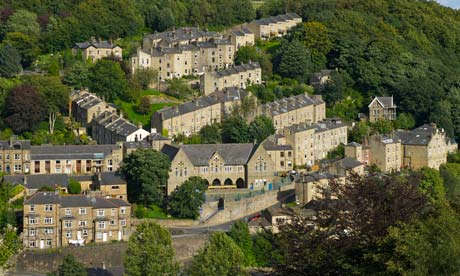
Hebden Bridge

In the same town this summer, people will be helping themselves to sweetcorn growing around the police station. Compost and watering cans seized in drug farm raids find use in the local gardens. And come the autumn a trip to see a local doctor will be a pick-your-own free-for-all as the health centre's grounds have been turned into orchards.
Grieving families who want a rose bush at the graveyard are encouraged to think productive – in one case leading to a remembrance garden of broccoli.
Meanwhile, commuters can snip fresh herbs from the beds and pots outside the railway station. It's all kept weeded by an army of local people who give up an hour or so on the occasional Sunday.
With 40 volunteer beekeepers just trained up, there will soon be honey for all. Anyone inspired to start their own vegetable patch can borrow a community tool library at the community-run allotments.
In the next village, things have been taken even further. The local community are attempting to take over a pub and have already taken over the cinema, the theatre and even the town hall.
In a fold of the wet hills of Yorkshire, the communities of Hebden Bridge and Todmorden are at the vanguard of a movement that is picking up momentum across a UK disillusioned with corporate business, government and cuts. It is neither hippy nor New Age, but is made up of ordinary people, old and young, from both affluent homes and social housing.
Call it a sharing revolution. "Community empowerment, social enterprise, co-operative, it has various titles, but it's quietly getting huge," said Mike Perry of the Plunkett Foundation, a thriving national organisation supporting such enterprises nationwide. "I don't think it's about the recession as such in financial terms; it's more that it's made people think about what's important to them.
"It starts with food, then it's taking over a shop that's closing. Then it's getting fired up about broadband and renewable energy, taking over infrastructure of their community. We're at the start of what could be a significant movement."
There are nine community-run pubs and 300 such shops in the UK, but those numbers look set to grow dramatically, not least because they show staggering resilience in tough times, but also as people power reacts against closures that fundamentally affect their lives. It may not create many jobs, but it does glue communities together and keeps money circulating locally.
And it's not just in the countryside; there are many web schemes across the UK where people can arrange to swap or give away items to others in their area. Tool libraries and bike sharing are growing. In London, Streetbank.com has begun organising people to share everything from a lawnmower to a DVD with others within a mile's radius. Some 3,000 people have signed up in its first few months. DIY retailer B&Q has a pilot scheme in Reading on tool sharing, to ease the environmental damage caused by millions of people buying power tools they may use only once or twice."

Friday, May 4, 2012

You and I are not blameless

In earlier blogs, I blamed the state of the world economy on governments, banks and big business. Sadly, you and I are not blameless.

I did an inventory recently. I have 5 watches, 
innumerable clocks apart from those embedded on PCs, phones, TV sets etc; although retired I still have 6 serviceable suits and who knows how many shirts and ties; I have a dozen pairs of shoes, including trainers and golf shoes; 
and I could go on. I am sure if you did an inventory you too may find yourself surprised at how much you possess that are surplus to requirements. I am told women accumulate even more than men and I can believe it given the number of newspaper/magazine articles, Webpages and TV programmes on it - shelves full of handbags 
and shoes, racks and racks of clothes, some which have never been worn.

Similar excess applies to food. We are now more careful. but even so each week we are throwing away food that has gone past the due date. At least, a minor consolation is that the waste food no longer goes into the general rubbish bin but into a food recycling bin for the council to re-compost.

My point is that if you and I wasted less, then the retailers would sell less and the manufacturers would produce less, and the earth's resources would deplete slower.

Tuesday, May 1, 2012

Marks & Spencer with longer lasting fruits

from: http://www.businessgreen.com/bg/news/2135806/-lasting-strawberries-reduce-food-waste


"Marks and Spencer will today unveil new packaging that promises to keep food fresh for up to two days longer and as a result reduce food waste.
A small strip inserted into punnets of strawberries uses a patented mixture of high-tech minerals and clay to remove ethylene, a hormone that causes fruit to ripen and turn mouldy, a hundred times more effectively than current material.
The retailer said that during in-store trials the strips "showed a minimum wastage saving of four per cent", which in effect means that 40,000 punnets a week could be saved during the peak summer season, equating to roughly 800,000 strawberries."

Monday, April 30, 2012

Fruity answer to food waste

Sunday Times: "JENNY DAWSON was disgusted as she looked down at the heap of wasted food at New Covent Garden Market in west London. The mangetout that had come from Kenya was still in its packaging and had been discarded as rubbish when wholesale trading closed at 7am. Tomatoes, courgettes, apples and onions lay abandoned in a pile, waiting to be binned.


Jenny Dawson makes chutney from fruit and vegetables normally dumped in landfill

Dawson had a brainwave — she would use the abandoned stock to start a business. Now, two years later, she sells chutneys made from leftover fruit and vegetables at Borough Market in south London. Her business, Rubies in the Rubble, gives the produce a second chance, preserving it in jars with a shelf life of up to two years.
“There’s nothing wrong with the food, it just hasn’t been bought by anyone. Nobody is at fault, but it is such a waste to throw it all away,” said Dawson.
“When you see the waste with your own eyes, it touches a nerve.”
Food waste is typically disposed of in landfill sites. As it decomposes, it produces methane and carbon dioxide, which are released into the atmosphere, where they act as greenhouse gases.
According to the latest report by Wrap, the environmental body, of the 7.2m tonnes of food thrown away in Britain each year, more than half is good enough to be eaten.
Dawson, 26, spent two years working for the hedge fund Odey Asset Management before making her career change."


http://www.facebook.com/rubiesintherubble

Feeding 5000 with 'waste' food


The Guardian: " ... The Feeding the 5000 team – a coalition of Fareshare, FoodCycle, Love Food Hate Waste and Friends of the Earth, led by food waste expert Tristram Stuart– treated Grondona and 4,999 others to a free meal using food that would otherwise have been wasted, such as cosmetically imperfect fresh fruit 
and vegetables – in short, wonky carrots.


The misshapen ingredients were not salvaged from nearby skips but supplied directly by farmers who sell their goods to supermarkets. "The supermarkets have strict cosmetic standards, so if a carrot is too long or slightly bent, it either goes in the bin or is left out in the field and simply ploughed back into the ground," Stuart says. "Today, that's not happened and all that food is here to be eaten."
While UK consumers cannot access farmers' surplus produce, Stuart hopes the event will inspire people to stop wasting food and to demand businesses end the practice of dismissing unsightly goods. Some supermarkets tried selling ugly vegetables in 2008 after an EU ruling meant odd-shaped and oversized produce could be sold in the UK.
As well as the 5,000 portions of curry on offer, a live cooking tent was showing the public how to cook and eat discarded bits of animals such as hearts, lungs and offal (offal consumption has apparently halved in the UK during the past 30 years). There were also 1,600 pints of apple juice ready to be drunk and celebrity chefs turning waste into well-seasoned goodies."


http://www.guardian.co.uk/uk/2011/nov/18/waste-food-feeds-5000-trafalgar


Sunday, April 29, 2012

Africa enjoys light bulb moment


London Sunday Times: "In Kenya, where the average income is $2 to $3 a day, the $50 (£30) cost of a modest solar lighting kit is the equivalent of buying a second-hand car in Britain. That cost is the main barrier to the take-up of solar power in countries such as Kenya where many homes are miles from the electricity grid but there is plenty of sunshine.


“The problem with renewables is that you are asking somebody to build their own power plant. They have to pay for the power infrastructure,” said Bransfield-Garth.
It takes eight minutes and 19 seconds for the sun’s rays to travel to Earth, which is where the company’s name comes from. Through its scheme, users pay a small upfront fee of $10 to install a solar panel and can then add credit when they need it by buying a scratch card that gives access to a code sent to their mobile phone by text. Typing the code into the Indigo keypad provides solar power for a set period, typically a week.
People in rural Africa may be leading quite traditional lives, but mobile phones are ubiquitous. Bransfield-Garth, 52, said that after a decade of working in the mobile phone industry, he recognised that they provide a good way for customers to make payments and pass on information.
The initial cost of the solar panel is absorbed by Eight19, which gets its money back over time. After the user has handed over about $100 through the scratchcard payments, the cost is settled in full. From that point on, all the electricity generated is free.
Both Eight19 and Solar Aid, a charity dedicated to solar panels, put $100,000 into a kickstart fund that is helping to support the first 4,000 installations in Kenya and South Sudan.
By the end of this year, Eight19 expects to have 20,000 units installed in several countries including Zambia, Malawi and potentially India. Bransfield-Garth said the company has had inquiries from 51 countries."