 |
Showing posts with label debt. Show all posts
Showing posts with label debt. Show all posts
Sunday, April 7, 2013
Small, micro firms in China are hungry for long-term loans
From - http://www.chinadaily.com.cn/china/2013-04/07/content_16379110.htm
China 's small and micro enterprises are still struggling with lackluster business , and most badly need long-term rather than short-term loans , said a report based on a survey released on Saturday at the Boao Forum for Asia .Of the 1,000 small and micro enterprises surveyed across China , 56.7 percent said their order numbers declined or stayed flat last year compared with 2011, and 57.7 percent said profit dropped or kept flat in 2012. In addition , 49.9 percent complained about an unstable workforce .One-third of SMEs need medium - and long-term loans to upgrade their equipment or invest in new products , the survey found , yet 63.3 percent of loans they got were short-term , less than a year .
"This stands in conflict with the fact that driven by fiercer competition , 39.3 percent of SME s have considered improving their product quality , 43.9 percent of SMEs have considered extending their product chain and 27.7 percent have considered upgrading their technology ,"said Ba Shusong , a banking expert with the Development Research Center under the State Council , who led the research .
A revelation of the report is that though 66.7 percent of SMEs regard bank loans as a primary financing measure , 62.1 percent of them do not now have them .Yao Wang , executive president of the Research Institute of the Boao Forum for Asia , said SMEs have little expectation of getting bank loans ."The survey showed most SMEs don 't have bank loans . They don 't expect to get a loan from big banks . This is pathetic ," Yao said .
In consequence , SMEs sought financing from family members and friends - 24.3 percent of micro enterprises and 7.5 percent of small enterprises . They are much less aware of the multiple new financing methods : 38.8 percent of SMEs , for example , do not know about intangible assets mortgages .==============================================================================
So it's not only British banks who are shy of lending to SMEs!

Wednesday, January 23, 2013
Davos man thrives while the rest of us pay for his excesses
from - http://www.guardian.co.uk/commentisfree/2013/jan/20/davos-world-economic-forum-bad-capitalism?CMP=twt_gu
'Dynamism' is the World Economic Forum's watchword as the way out of the crisis and it is meaningless


The village of Davos where the World Economic Forum meets. Photograph: Fabrice Coffrini/AFP/Getty Images
More than 2,500 alpha men and women from more than 100 countries will descend on Davos this week to spend four days discussing the world's urgent need to adopt "resilient dynamism". This, the organising watchword for this year's annual gathering of panjandrums at the World Economic Forum, is allegedly the way out of the crisis. It is meaningless.
Who, for example, would support non-resilient stagnation? Western capitalism, and, arguably, global capitalism, has arrived at an apparent dead end. It is in profound trouble. But if the best answer to austerity and economic malaise is resilient dynamism every delegate should stay at home. As a call to action, you might as well urge everyone to be manly, womanly and decisive. Virtuous states of mind, but hardly blueprints for action.
In any case, for most of the business leaders attending Davos, the economic malaise is an abstraction. Profits as a share of GDP in almost all western countries are at record highs, along with executive pay. Meanwhile, real wages for the majority are stagnating, if not falling, justified by our economic leaders in Davos as the proper if sad consequence of "structural adjustment". Goldman Sachs, for example, shamed from deferring its bonus payments into the next financial year so that its staff could enjoy the lower tax rate, has just enjoyed a bumper year. Davos men and women are prospering. No structural adjustment for them.
There will doubtless be the usual appeals for more free trade, more scientific research and more investment in skills as the expensively clad executives move from seminar and sonorous keynote speech to reception and back to the dinner table. But what there will not be at Davos is a willingness to countenance a sea change in the way capitalism is organised. It can do what it will and that is to continue to confer fortunes on those at the top, with little risk, while directing pain on to others.
The paradox is that the chief reason capitalism is in crisis is that without such challenges it has undermined its own dynamism and capacity for innovation. Instead, it merely offers enormous and unjustified self-enrichment for those at the top.
Nor does the malign impact of inequality stop there. I was stunned to read in a recent IMF working paper, with the hardly catchy title Income Inequality and Current Account Imbalances, that the whole – yes the whole – of the deterioration of the British current account deficit between the early 1970s and 2007 could be explained by the rise in British inequality. It is a similar, if less acute, story across the rest of the industrialised or, rather, deindustrialising west.
What the IMF team shows is that as the share of national income devoted to profits and top pay rises to its current levels, so a noxious economic dynamic is created. By definition, there is less of the pie available to the mass of wage earners, whose real wages become squeezed. To sustain their living standards, they borrow, which has been easier than ever over the past 40 years as banks take advantage of financial deregulation. Overall demand thus carries on growing, but at the price of sucking in imports and ever higher personal debt levels for ordinary wage earners.
Finally, the music stops, as it has now, as both debt and import levels become unsustainable. The state of play in Britain – crazy levels of private sector debt and a record trade deficit – can thus be explained by the rise of inequality. And one of the chief causes of that, the IMF believes, is the decline in trade union bargaining power!
Wednesday, November 14, 2012
Citizens arise! Give up your lattes and Kindles
Now we're talking sense. If the government cannot or will not act or is too slow in acting, 'citizen power' is the next best thing.
From - http://www.thetimes.co.uk/tto/opinion/columnists/alicethomson/article3599302.ece#:
"If Starbucks and Amazon wriggle out of paying tax here, customers must take a stand
They track you down if you’re a small business; hound you for every last penny. They’re utterly ruthless, the men from HMRC.
A friend set up the Crazy Baker café in Kensal Rise, West London, three years ago. Every morning she wakes at 4am to knead her sour dough spelt, often working 20-hour days, harder than any CEO, to produce amazing scones, cakes and brioche. She employs a full-time bookkeeper and an accountant, but is still terrified of getting her figures wrong and the taxman’s knock on the door.
Yet down the road are two Starbucks that don’t pay a penny of corporation tax. My complaint is not about their lattes, which are adequate, or their chocolate muffins, which are passable, but about their tax arrangements, which aren’t. Of course small cafés have to compete with the big boys, but then why should they be so disadvantaged?
This week Troy Alstead, the Global Chief Financial Officer of Starbucks, went in front of the Public Accounts Committee to explain why this poor multinational simply cannot pay any corporation tax. It doesn’t make any money in the UK, he said, not a bean for its beans. He wrung his hands, then smirked as he explained the company faces “profitability challenges”.
Although Starbucks has 790 UK stores, second only to McDonald’s in the restaurant trade, it has made a profit just once in 15 years in Britain. When asked how Costa Coffee, a smaller chain, managed to make £49.5 million profit last year and paid £15.5 million in taxes, he simply said: “It’s a failing.”
The MPs of the PAC couldn’t believe it. I listened to three hours of the siege of Troy but you only have to hear five minutes to get the gist that the way Starbucks manages its affairs through Amsterdam is, in the words of one MP, “specifically designed to avoid tax”.
Amazon and Google were grilled too. The man from Amazon insisted that although customers pay in pounds for its products, which are delivered from UK centres through the Royal Mail with a British stamp, it’s a Luxembourg company. At least Matt Brittin, the chief executive officer of Google UK, admitted that the company operates from Ireland and Bermuda because of their low corporation tax rates.
Starbucks tries to sound like the caring corporate. I’ve visited the original shop in Seattle, named after the first mate in Moby-Dick. It’s cosy with its “handcrafted beverages”. Its website says “businesses can and should have a positive impact on the communities they serve”. How does paying virtually no tax fit into this ethos? But you can’t blame Troy; executives have a duty to maximise shareholder return and if they can find a legitimate way not to pay tax, of course they will.
One of Bill Clinton’s most successful TV ads in the 1992 election was: “This is the $825 billion question. That’s how much foreign corporations operating in the US took in one year. But 72 per cent of them didn’t pay a dime in tax. Not one dime.” Ed Miliband could easily borrow the same tactics.
The Government is acting — slowly. George Osborne should demand that these giants are more transparent about their operations and the Revenue should establish a ranking of companies — the good taxpayer’s guide. The Chancellor is trying to clamp down on foreign tax havens and is talking to the Germans about a plan that could see companies taxed on the sales they make in each country.
But all that will take a long time, so now it’s up to us, the consumer. Costa pays tax, so go there or to other small businesses like the Crazy Baker. Or buy McDonald’s: at least it paid £80 million in corporation tax last year. Margaret Hodge, who chairs the PAC, said she felt so incensed by Amazon that she’s given up her Kindle.
Christmas will be tricky without Amazon. But we should boycott companies that don’t pay their fair share of tax. All multinationals are vulnerable to public opinion if they have a product to sell directly to us. If consumers put pressure on them, their executives will think: if we don’t start acting responsibly, our brand will be damaged.
It may be only the “little people” who pay taxes but they also drink coffee. Starbucks should not underestimate the power of this latte lobby."
Amazon receives $252 million back tax claim
It's about time all major countries suffering from tax avoidance by major international corporations followed France's lead. In all probability, Amazon will get away with a fraction of the bill, as they probably have more lawyers than the French goveernment. But a strong message is being shouted from the rooftops.
Once again, as we have said before, why don't major countries charge a % of turnover/revenue as tax rather than as a % of profit for all companies doing more than, say, £100m pa. If they claim they are not making a profit, then the top management should be fired by their shareholders!
From - http://news.yahoo.com/amazon-receives-252-million-back-tax-claim-171904647--sector.html:

"Internet retailer Amazon said it had received a $252 million demand from the French tax authorities for back taxes, interest and penalties in relation to "the allocation of income between foreign jurisdictions".
The claim comes as European countries step up efforts to clamp down on U.S. companies which minimize their tax bills in the continent by channeling profits through low-tax regimes.
Amazon said it would fight the tax claim, in court if necessary, and that the demand related to the calendar years 2006 through 2010.
"We disagree with the proposed assessment and intend to vigorously contest it," the company said in its third quarter results filed last month.
An Amazon official referred to the tax demand, which had not been previously widely reported, at a UK parliamentary committee hearing.
Amazon minimizes its tax bill in France and other European countries by channeling sales through Luxembourg, which offers tax breaks to foreign companies which base themselves there.
Amazon said it received a proposed tax assessment from the tax authority in September but that it was still awaiting a final assessment.
Internet group Google is also under audit by the French tax authority regarding its structure, which channels sales through Ireland, but the company denied a newspaper report last month that it had received a back tax claim for 1 billion euros."
Sunday, November 11, 2012
Do any large companies pay UK tax?
Water companies pay little or no tax on huge profits
Thames Water and Anglian among companies paying little or no corporation tax while executives pocket huge bonuses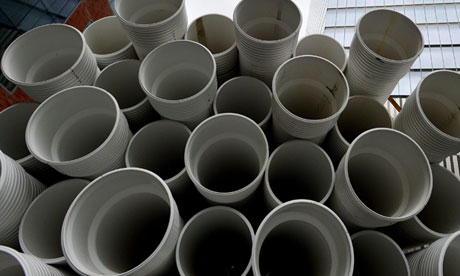
"Three of Britain's biggest water companies paid little or no tax on their profits last year while generously rewarding their executives and investors, the Observer can reveal. Thames Water and Anglian Water paid no corporation tax on the profits made from their utility businesses while Yorkshire Water kept its payments to the Revenue in the low millions.
All the companies made hundreds of millions of pounds in operating profits and some have rewarded their senior executives with performance-related bonuses and investors with huge dividends. Martin Baggs, the chief executive of Thames Water, which enjoyed a £76m tax rebate in 2012, was given a bonus of £420,000 on top of his £425,000 salary and is in line for a further windfall of £1m based on company performance through to 2015.
The controversy follows a series of revelations that major companies, including multinationals such as Starbucks, Google and Amazon, have used complex financial manoeuvres to avoid tax, while generating huge profits and rewards for their owners.
The figures will be particularly galling for taxpayers because the water companies implement price rises every year linked to the retail price index by the regulator Ofwat and in effect have a monopoly in their areas. Last night the water companies were accused of "highly questionable" financial arrangements by the deputy leader of the Liberal Democrats, Simon Hughes, who has written to the parliamentary authorities to demand an investigation. He said: "The government should use its powers of licensing to make sure the companies behave in a responsible way to their customers and to society, which includes paying their taxes.""
Wednesday, October 10, 2012
What's wrong with Capitalism?
In this - http://www.thersa.org/events/video/animate/rsa-animate-crisis-of-capitalism -

RSA Animate video - Crisis of Capitalism
28 Jun 2010
Radical sociologist David Harvey asks if it is time to look beyond capitalism, towards a new social order that would allow us to live within a responsible, just and humane system.
Radical sociologist David Harvey asks if it is time to look beyond capitalism, towards a new social order that would allow us to live within a responsible, just and humane system.
Monday, July 30, 2012
Why Capitalism Has an Image Problem
From WSJ - Charles Murray:
Mitt Romney's résumé at Bain should be a slam dunk. He has been a successful capitalist, and capitalism is the best thing that has ever happened to the material condition of the human race. From the dawn of history until the 18th century, every society in the world was impoverished, with only the thinnest film of wealth on top. Then came capitalism and the Industrial Revolution. Everywhere that capitalism subsequently took hold, national wealth began to increase and poverty began to fall. Everywhere that capitalism didn't take hold, people remained impoverished. Everywhere that capitalism has been rejected since then, poverty has increased.
Getty Images


Henry Ford with his Model T


Corbis


A dry-cleaning store


Yet it hasn't worked out that way for Mr. Romney. "Capitalist" has become an accusation. The creative destruction that is at the heart of a growing economy is now seen as evil. Americans increasingly appear to accept the mind-set that kept the world in poverty for millennia: If you've gotten rich, it is because you made someone else poorer.The Saturday Essay
![[image]](http://si.wsj.net/public/resources/images/RV-AH663_CAPITA_DV_20120727172640.jpg)
Capitalism has lifted the world out of poverty because it gives people a chance to get rich by creating value and reaping the rewards. Who better to be president of the greatest of all capitalist nations than a man who got rich by being a brilliant capitalist?
What happened to turn the mood of the country so far from our historic celebration of economic success?
Two important changes in objective conditions have contributed to this change in mood. One is the rise of collusive capitalism. Part of that phenomenon involves crony capitalism, whereby the people on top take care of each other at shareholder expense (search on "golden parachutes").
But the problem of crony capitalism is trivial compared with the collusion engendered by government. In today's world, every business's operations and bottom line are affected by rules set by legislators and bureaucrats. The result has been corruption on a massive scale. Sometimes the corruption is retail, whereby a single corporation creates a competitive advantage through the cooperation of regulators or politicians (search on "earmarks"). Sometimes the corruption is wholesale, creating an industrywide potential for profit that would not exist in the absence of government subsidies or regulations (like ethanol used to fuel cars and low-interest mortgages for people who are unlikely to pay them back). Collusive capitalism has become visible to the public and increasingly defines capitalism in the public mind.
Another change in objective conditions has been the emergence of great fortunes made quickly in the financial markets. It has always been easy for Americans to applaud people who get rich by creating products and services that people want to buy. That is why Thomas Edison and Henry Ford were American heroes a century ago, and Steve Jobs was one when he died last year.
When great wealth is generated instead by making smart buy and sell decisions in the markets, it smacks of inside knowledge, arcane financial instruments, opportunities that aren't accessible to ordinary people, and hocus-pocus. The good that these rich people have done in the process of getting rich is obscure. The benefits of more efficient allocation of capital are huge, but they are really, really hard to explain simply and persuasively. It looks to a large proportion of the public as if we've got some fabulously wealthy people who haven't done anything to deserve their wealth.
Saturday, July 21, 2012
Social lending cuts out the banks
From FT: "Poor savings rates and a growing mistrust of high street lenders are prompting more consumers to bypass banks and do business with one another via peer-to-peer (P2P) websites." - http://www.ft.com/cms/s/0/852a2ae0-d00f-11e1-a3d2-00144feabdc0.html#ixzz21HW4hEQK
The growth of P2P lending is a sign that people are trying to seek alternative means to borrowing money than from the high street banks. This is where individuals will offer to lend money to borrowers via an investment club - usually on-line. This growth is due to a combination of mistrust and the fact that the banks tend to be too demanding in their criteria for 'safe' lending - never mind the so-called casino mindset of the so-called investment banks.
Some of the main P2P investment clubs are:
- Ratesetter -
- Thin Cats (editor: ha, ha) -
- Zopa -
- Funding Circle -
- Squirrl -
- Seedrs -


Thursday, May 3, 2012
Banks at fault
A large part of the problem with the world economy lies with major banks. I don't mean domestic banks offering current and savings accounts for consumers; but commercial and investment banks who lend money to businesses and governments and - at the same time - buy and sell shares and offer all manner of so-called financial instruments.
1. A large number of Western banks ended up owning a lot of high risk 'assets'
2. The total value of these so-called assets were n times the face value, never mind the risk-discounted real value.
3. When some mortgage holders started to default; the whole 'pyramid' scheme was exposed for what it was and the whole house of cards (pun intended) collapsed.
Subscribe to:
Posts (Atom)